By
By 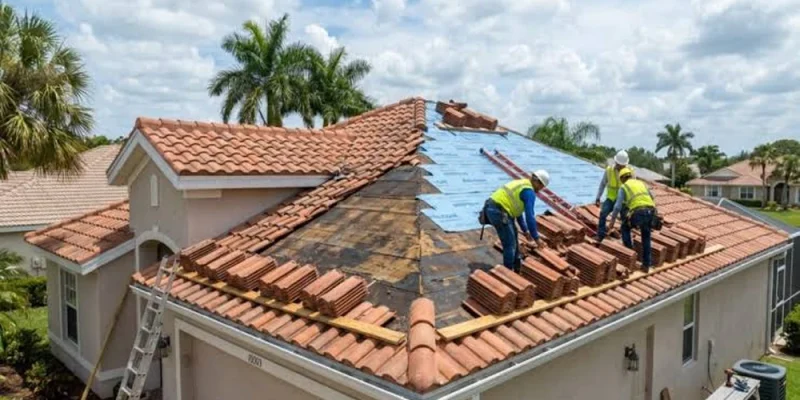
Most Florida homeowners think they bought a roof. What they actually bought were two separate systems stacked on top of each other – and only one of them is built to last a century. That gap is why so many tile roofs in South Florida fail decades before they should, and why the neighbors across the street with the same material have zero problems.
The tile itself is almost never the issue. The underlayment beneath it is. Understanding that one distinction changes every decision you’ll make about your roof, from which material to pick at installation to how you schedule maintenance. Here’s how it all breaks down.
Two Materials, One Big Difference
Walk through any established South Florida neighborhood and you’ll see two types of tile roofs: clay and concrete. They look similar from the street, but they perform very differently over time.
Clay tile is baked earth fired at extreme temperatures. It’s one of the oldest roofing materials in the world, and when properly maintained, it typically lasts 75 to 100 years or more. That’s not a marketing claim – it’s a physical reality. The mineral composition resists UV degradation at a molecular level, absorbs almost no moisture, and holds structural integrity through decades of Florida’s heat cycling. Some clay tile roofs in the Miami area installed in the mid-20th century are still performing today.
Concrete tile is the more affordable option, and it’s genuinely good. Concrete tile, more common on newer Florida homes, generally lasts 50 to 75 years depending on weather exposure. That’s still two or three times what you’d get from asphalt shingles in the same climate. The tradeoff is that concrete is heavier, prone to color fading over decades, and absorbs slightly more moisture than clay – a real concern in Florida’s humidity.
The choice between them usually comes down to budget and structure. According to 2026 industry data, concrete and clay tile roofs together make up 25% of the Florida residential roofing market, while asphalt shingles still hold 60% market share – mostly because of lower upfront costs. But for homeowners who plan to stay in their home long-term, tile’s longevity math works in your favor.
Here’s a side-by-side comparison of what matters most:
| Factor | Clay Tile | Concrete Tile |
|---|---|---|
| Lifespan (tile only) | 75 to 100+ years | 50 to 75 years |
| Wind rating (installed) | Up to 140 mph | Up to 125 mph |
| Weight vs. clay | Baseline | 15 to 25% heavier |
| Color retention | Excellent | Moderate (fades over decades) |
| Relative upfront cost | Higher | Lower |
| Underlayment replacement needed | Every 20 to 25 years | Every 20 to 25 years |
Notice that last row is identical. That’s the whole point.
The Underlayment Problem Nobody Talks About
Here’s the thing most tile roof owners discover too late: the tile and the underlayment beneath it have completely different lifespans, and the underlayment almost always fails first.
The tiles themselves are waterproof, but the underlayment beneath them is what actually keeps your home dry. That felt or synthetic layer can degrade after 20 to 30 years and require replacement even when the tiles are still in perfect condition. So you can have 80-year-old clay tiles sitting on top of a failed secondary water barrier. The tiles look fine. Your ceiling is leaking.
This is what I call the Two-System Rule of tile roofing: your roof is two systems with two maintenance schedules, not one. Miss that distinction and you’ll spend money patching symptoms rather than addressing causes.
The fix, when the underlayment reaches end of life, is a tile-off project. Crews carefully remove the existing tiles (most survive this process intact), install a new compliant underlayment beneath, and reinstall the originals. Florida requires a minimum 30-pound felt, a #43 cap sheet, or a self-adhering modified bitumen underlayment in high-velocity hurricane zones (HVHZ), as specified under the Florida Building Code, Section 1507. That’s not optional, and a contractor who skips it is leaving you exposed both physically and legally.
Choosing a peel-and-stick self-adhering underlayment at this stage – rather than standard felt – is worth the premium. It bonds directly to the deck and adds meaningful years to the system’s effective service life.
Hurricane Season Is the Real Test
Tile roofs are uniquely suited to Florida for one reason beyond longevity: mass. A concrete tile’s weight acts as a natural anchor during wind events. Clay’s tested wind rating of up to 140 mph, combined with proper mechanical fastening, keeps tiles in place when a Category 3 storm rolls through South Florida.
But “properly fastened” is the operative phrase. All roof coverings, roof systems, and roof assemblies must be designed and installed to resist the wind load requirements of Chapter 16 (High-Velocity Hurricane Zones) of the Florida Building Code. Older tile roofs – especially those set in mortar rather than mechanically fastened – were installed under very different standards. Older tile roofs installed before Florida updated its building codes pose a real risk, and if your tile roof is more than 20 years old, a professional inspection before hurricane season is worth scheduling now.
“The right decision comes down to condition, not just cost. A lower repair bill today is not always the better value if it leads to more interior damage, emergency leak calls, and a full replacement in the near future anyway.”
– Roofing industry consensus shared widely across South Florida inspection professionals, reflecting the standard guidance for tile roof repair-or-replace decisions
Salt air matters too. Coastal properties in Miami Beach, Aventura, and Hollywood face accelerated weathering at every connection point. Flashing, fasteners, and ridge caps all corrode faster within a mile of the ocean. A tile roof that performs perfectly inland may need more frequent attention on the coast.
The Repair-or-Replace Decision: A Practical Framework
Not every crack or leak means you need a new roof. But not every repair quote is the right answer either. Here’s a clear way to think through the decision:
- Isolated tile damage with dry underlayment: Repair. Replace cracked or broken tiles promptly so water never reaches the deck. This is quick and inexpensive when caught early.
- Recurring leaks with underlayment age over 20 years: Tile-off underlayment replacement. The tiles may be fine; the system underneath them isn’t.
- Widespread tile deterioration plus underlayment failure: Full replacement. Chasing repairs on a roof this far along costs more over three years than a single replacement decision made now.
- Structurally sound tiles but cosmetic issues: Cleaning and recoating. Algae and mildew don’t need new materials – they need the right treatment protocol and a maintenance schedule.
The trickiest scenario is a roof that looks solid from the street but has underlayment quietly failing in sections. The only way to know is a professional inspection that assesses the full system, not just visible tile condition.
That’s exactly why working with experienced professionals who specialize in tile roofing repair and installation matters more than it might seem – they know to look at the whole system, not just what’s broken on the surface.
What You Should Do Before the Next Storm Season
Practical steps, in the order they actually matter:
- Find out how old your underlayment is. If you don’t have records, an inspector can often assess its condition visually and by feel.
- Schedule an inspection in spring, before hurricane season opens in June. This is Florida’s most useful maintenance calendar move.
- Ask your contractor specifically about your fastening system. Mortar-set tiles from the 1990s and earlier should be re-evaluated for wind uplift performance.
- Replace damaged tiles immediately, not at your next convenience. One missing tile lets water hit underlayment. Wet underlayment degrades faster. The damage compounds.
- Consider a peel-and-stick underlayment upgrade if you’re already doing a tile-off project. The cost difference is modest relative to the extended system life.
Your tile roof is one of the most durable systems available for Florida’s climate. Clay roofs installed decades ago are still protecting homes across South Florida right now. The ones that failed didn’t fail because tile is weak. They failed because the two-system nature of tile roofing wasn’t respected. Know both systems, maintain both systems, and your roof will almost certainly outlast everything else on the block.
So here’s the question worth sitting with: if your tile roof is more than 15 years old, do you actually know the condition of what’s underneath the tiles?