By
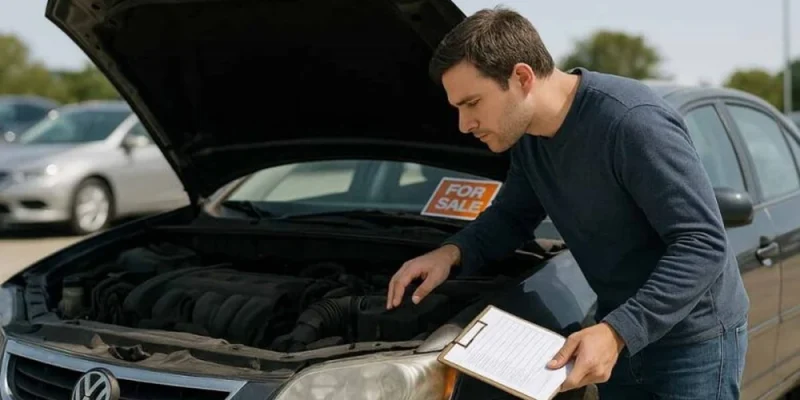
Certified cars cost more than the same model sitting three rows away with no badge, and most shoppers never ask what the extra money buys. Roughly a few thousand dollars, on average, is what a buyer hands over for a warranty, a multipoint inspection, and a warranty claim phone number that connects to one company instead of three. Worth it if you know what’s covered. Deeply not worth it if you don’t.
Here’s the part that trips people up. “Certified” isn’t a regulated term. There’s no federal standard, no government inspector, and no penalty for slapping the word on a windshield. A manufacturer-backed program and a dealer-run one can sound identical on the sticker and behave nothing alike in year three. That’s why it helps to shop where the program terms are spelled out in writing, which is what you get when you look at Certified Pre-Owned Cars in Seaside, CA, at a franchised store.
Your job, before you sign anything, is to find out which type of certification you’re staring at.
Manufacturer-backed or dealer-backed?
The two look similar and are not.
Manufacturer-certified is the stronger tier because the automaker, not the store, sets the rules. That usually means a vehicle age and mileage ceiling, a fixed inspection checklist, a factory-backed limited warranty, roadside assistance, and often a return window of a few days. The automaker can also deny coverage, which is exactly why the inspection list runs to well over a hundred checkpoints. It’s a warranty underwriting decision dressed as a retail service.
Dealer-certified is a store’s house program. It can be excellent, honest, and generous. It can also be a sticker and a fresh oil change. You cannot tell which from the badge alone, so you ask for the actual document and read the coverage period in months and miles.
My bias: pay for the manufacturer tier, or pay nothing extra at all. A house program that only guarantees a short window is a promise with a short memory.
The buyer’s walkaround: five steps before you touch the paperwork
Real texture beats theory here. Picture a Tuesday afternoon, a 2021 SUV on the lot, and a salesperson holding a folder. Here’s the sequence that keeps you out of trouble.
- Ask for the inspection report, not a summary of it. You want the completed checklist with the technician’s notes, including anything repaired. Fail items that got fixed are where you learn how the store treats the car.
- Read the warranty as a separate product. Note exactly when the coverage clock starts, whether a deductible applies per visit, which components are excluded, and where you can get work done. Naming a specific shop for repairs is a real restriction and worth knowing about in advance.
- Pull the vehicle history report yourself. A car that was certified and later repaired after a reported collision has a story the badge doesn’t tell. The Federal Trade Commission has published guidance on used car buying and the usefulness of history reports, and its take is blunt: they’re a tool, not a guarantee.
- Check for open recalls using the VIN. A certified car can still have an unrepaired safety recall unless the program requires every one to be closed out. The National Highway Traffic Safety Administration runs a VIN lookup you can run yourself in about two minutes, and you should, even if the dealer says the car is clean.
- Get your own mechanic to look at it, or skip that and negotiate the price down. Certification is not the same as an independent inspection. You have no relationship with the technician who signed off, and no complaint channel if they miss something.
That last step draws eye rolls from people who assume the badge makes it redundant. It doesn’t. Two sets of eyes on a used vehicle is never a bad trade for an hour of your afternoon.
Where the price premium actually comes from
The extra money covers warranty risk, reconditioning, and the cost of holding inventory while paperwork gets sorted. Some of it is overhead you can’t dodge. Some of it is margin you can push back on, especially when the same vehicle sits on several lots within driving distance.
Zoom out for a second. According to the J.D. Power family of consumer studies, reliability and dependability take on outsized weight in how buyers rate and choose vehicles. That matters for certified shopping because a program attached to a model with a strong dependability record buys you less than the same program on a model with a mixed one. Coverage matters most where risk is highest. Don’t pay the certified premium on a car that probably won’t need it, and don’t skip it on one that might.
| What you’re weighing | Leans certified | Leans ordinary used |
|---|---|---|
| Mechanical confidence | You want a documented inspection and someone else holding warranty risk | You have a trusted mechanic and know the model well |
| Budget | The premium fits in cash or a payment you’ve already set a ceiling on | The premium would stretch the loan and push out maintenance money |
| Ownership window | You plan to keep it past the coverage end date | You’ll trade in a couple of years |
| Time | You’d rather not spend weekends vetting cars | You enjoy the hunt and can walk away from anything |
Questions to ask out loud
Bring this list on paper. It changes the room.
- Who backs this warranty, the automaker or your store?
- What’s the coverage in months and miles, and does a deductible apply?
- Can I take it to any shop, or only yours?
- Is the price difference between this car and your non-certified comparable on the same sheet?
- Which recalls are open, and will you close them before delivery?
- What’s your return policy in writing, and does it have a mileage cap?
The return window line is the one I’d push hardest on. A few days to change your mind is worth more than an extra year of powertrain coverage you may never use. If the store won’t put the window in the buyer’s order in writing, treat it as marketing.
Closing the loop
Certified programs earn their premium in exactly one scenario: you get a written manufacturer-backed warranty, a real inspection report, a clean recall check, and a return window you’d actually use. If any one of those pieces is missing, you’re paying extra for a badge that fits on any windshield. Skip it and negotiate a lower price on the same car.
Shopping in a coastal town makes the last step easier than it sounds, because you can compare a certified badge against the same model a few miles away and see what the premium is really buying. Run the five steps, ask the questions, and let the paperwork, not the sticker, make the call. What’s the one document you’d refuse to sign without?