By
By 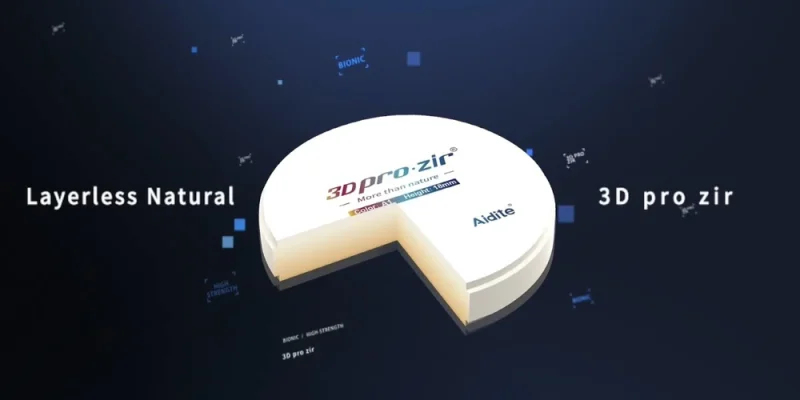
Material consistency is one of the most undervalued competitive advantages a US dental lab can build, and it is built through deliberate decisions about which manufacturer’s materials to standardize on and how to integrate those materials across different stages of the production workflow. Labs that source zirconia from one company, PMMA from another, and milling accessories from a third are managing unnecessary complexity that produces inconsistency, requires more troubleshooting time, and creates the kind of production variability that is difficult to diagnose because any of three separate material systems could be responsible. Building a coherent aidite zirconia and PMMA material stack is the alternative: a deliberate standardization decision that simplifies procurement, reduces variability, and allows the lab to develop deep familiarity with a consistent set of materials rather than constantly adapting to new products.
Aizir Zirconia: The Foundation of the Stack
The foundation of an Aidite-based material stack is the aizir zirconia range, which covers the full spectrum of fixed restoration requirements from strength-critical posterior cases through highly esthetic anterior work. Understanding where each product within the range fits allows labs to route cases to the appropriate material without defaulting to a single grade for everything, which either compromises strength where it is needed or compromises translucency where esthetics are the priority.
Aidite zirconia crowns in standard opacity grades deliver the hardness, density, and marginal integrity that high-volume posterior milling demands. The material’s consistent sintering behavior, with well-documented time-temperature profiles that produce predictable shrinkage and final dimensions, is what allows labs to hold tight marginal tolerances without the batch-to-batch adjustment that inconsistent sintering behavior requires.
Aidite 3D Pro Zir: The Multilayer Solution
Aidite 3D Pro Zir represents the multilayer segment of the aizir zirconia range, where vertical layering of the disc produces the cervical-to-incisal color gradient that eliminates the need for post-sintering stain work on anterior and premolar cases. For labs producing significant volumes of anterior restorations alongside posterior cases, standardizing on aidite 3D pro zir for the esthetic segment and a standard strength-optimized grade for the posterior segment creates a two-tier zirconia strategy that covers the full clinical range without requiring stocking of multiple grade-specific discs.
Multilayer PMMA: Completing the Clinical Workflow
Multilayer PMMA from Aidite closes the loop between provisional and definitive restoration. A provisional milled from Aidite PMMA in the shade corresponding to the planned aidite zirconia crowns allows direct shade comparison between the temporary the patient is wearing and the final material it will be replaced with. This comparison, conducted at a review appointment before the zirconia is sintered, catches shade adjustments before the definitive restoration is committed rather than after delivery, reducing remakes driven by esthetic surprises at crown delivery.
PMMA denture base materials from the same manufacturer complete the removable prosthetics workflow with the same material consistency principle: predictable shade, consistent machinability, and adequate mechanical properties for provisional and extended provisional use across both fixed and removable applications.
The Practical Advantage of Single-Source Aidite Procurement
The practical advantage of building an aidite zirconia and PMMA material stack through a single US distributor is the simplification of every downstream workflow decision. Technical support questions about material behavior go to one source that knows the full product range. Batch documentation and certificates of analysis follow a consistent format that simplifies quality record management. Restocking decisions involve one ordering relationship rather than several. And the accumulated familiarity the lab builds with Aidite material behavior across zirconia, PMMA, and accessories compounds over time into a genuine production advantage that reduces troubleshooting time and improves throughput predictability.