By
By 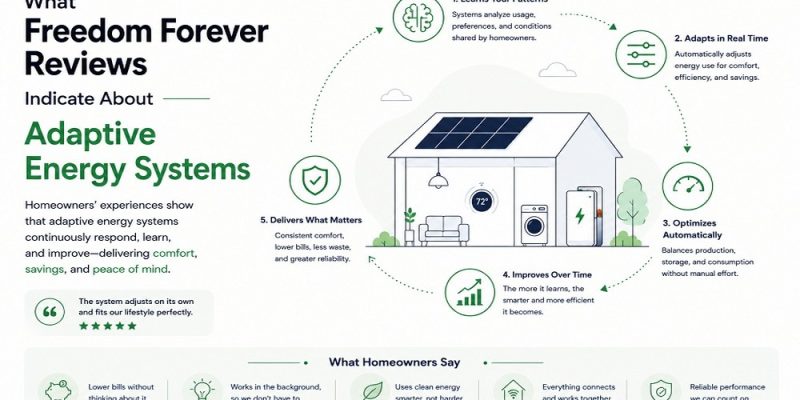
Residential energy systems increasingly fall into two distinct categories: static systems that follow fixed rules and adaptive systems that respond to changing conditions. As smart homes expand, adaptability has become a defining characteristic of modern energy management. Freedom Forever Reviews reflect a market where solar systems are often paired with monitoring tools and digital dashboards that provide greater visibility into production and usage.
Households no longer view energy infrastructure as something set once and left untouched. Instead, they expect systems to adjust as routines, occupancy, and technology change. Adaptability places energy management closer to daily life rather than locking it into initial assumptions.
Static Systems Rely on Fixed Assumptions
Static energy systems operate on predefined settings established at installation. Schedules, thresholds, and usage patterns remain largely unchanged unless homeowners intervene manually. These systems assume that household behavior stays consistent over time.
This approach limits flexibility. When routines shift or conditions change, static systems continue operating as programmed. Adjustments require active management, placing responsibility on homeowners rather than the system itself. Over time, this rigidity can lead to inefficiencies or frustration.
Adaptability Begins with Software
Adaptive energy systems rely on software rather than fixed hardware rules. Software allows systems to interpret data, adjust behavior, and refine performance continuously. This capability distinguishes adaptive systems from static ones. Software-driven flexibility enables rapid response to changing conditions. Improvements can be deployed through updates rather than physical modifications. This approach supports ongoing optimization without interrupting household operations.
Software-driven platforms process inputs such as usage patterns, occupancy signals, and environmental conditions. Instead of following a single schedule, systems respond to observed behavior. Adaptability depends on this ongoing interpretation rather than a one-time configuration.
Learning From Household Behavior
Adaptive systems learn by observing how households use energy. Over time, platforms identify recurring routines and recognize deviations. This learning allows systems to adjust operations without manual input. As patterns become clearer, responses grow more precise and timely. Systems can anticipate needs rather than reacting after the fact. This predictive capability further reduces the burden on homeowners while improving overall efficiency.
As routines repeat, systems refine responses. Adjustments become more precise, focusing on meaningful patterns rather than isolated events. Learning allows energy management to align with actual living conditions rather than assumed ones.
Adjustment Happens Incrementally
Adaptability works through gradual adjustment rather than abrupt change. Systems fine-tune operation in small increments, reducing the risk of disruption. This approach preserves comfort while improving efficiency. Incremental changes allow systems to learn without overcorrecting. Performance improves steadily as adjustments accumulate over time. This steady refinement supports reliability alongside long-term energy savings.
Incremental adjustment allows systems to test responses and observe outcomes. If a change proves effective, it becomes part of regular operation. If not, systems recalibrate. This process supports stability while enabling improvement.
Adaptability Supports Changing Occupancy
Household occupancy often changes over time due to work schedules, family dynamics, or lifestyle shifts. Static systems struggle to account for these changes without reprogramming. Adaptive systems adjust automatically as patterns shift. This flexibility reduces the need for manual updates or frequent recalibration. Systems remain aligned with real-world behavior as routines develop. Over time, adaptability helps preserve efficiency and comfort despite changing household dynamics.
By responding to presence and absence signals, adaptive systems reduce unnecessary use during low-occupancy periods. When activity increases, systems respond smoothly. This flexibility supports efficiency without requiring homeowners to reset configurations.
Software Integrates Multiple Inputs
Adaptive energy systems integrate data from multiple sources. Production levels, usage trends, weather conditions, and device status all inform system behavior. This integration supports coordinated responses rather than isolated adjustments. By evaluating inputs together, systems can prioritize actions with the greatest overall impact. Decisions reflect context rather than single data points. This holistic approach enables more efficient and balanced energy management across the home.
By considering multiple inputs together, systems avoid overreacting to single factors. Adaptability depends on context, allowing systems to balance competing priorities. Integration supports decisions that reflect overall conditions rather than narrow triggers.
Visibility Reinforces Adaptability
Visibility plays an important role in adaptive systems. Dashboards and monitoring tools show how systems adjust over time, helping homeowners understand behavior. This transparency builds confidence in automated adjustments. When changes are visible, automation feels intentional rather than opaque. Homeowners can follow how the system responds to patterns without needing to intervene. Over time, this clarity reinforces trust in adaptive performance and long-term reliability.
When homeowners see systems responding logically, trust grows. Visibility connects adaptability with understanding, reducing uncertainty about why changes occur. Clear feedback supports long-term acceptance of adaptive operation.
Customer Feedback Reflects Adaptive Performance
Homeowner feedback often highlights how systems improve with time. As platforms adjust to routines, operation feels smoother and more predictable. In online discussions, including Freedom Forever reviews, the system is frequently described as feeling better aligned with household needs after extended use, rather than immediately after installation.
These patterns suggest that adaptability influences satisfaction. Reviews reflect appreciation for systems that adjust quietly rather than requiring ongoing input. Adaptive performance becomes evident through experience rather than explanation.
Adaptability Supports Long-Term Relevance
Energy systems must remain relevant as technology and household needs change. Adaptive systems support this by adjusting behavior without requiring a complete redesign. Software updates and data-driven refinement extend system usefulness. This adaptability helps protect long-term investment value. Homes can incorporate new devices or usage patterns without disrupting existing performance. Over time, systems develop alongside households rather than becoming outdated.
This longevity reduces the need for frequent intervention. Households rely on systems to remain aligned with needs as conditions change. Adaptability supports continuity rather than forcing periodic resets.
Residential Energy Design into the Future
As adaptability becomes a defining feature, residential energy design priorities shift. Systems focus on learning, integration, and responsiveness rather than rigid control. Adaptability allows homes to manage complexity without sacrificing comfort.
Software quality and long-term support play a defining role in how residential energy systems perform over time. Adaptive systems deliver their greatest value when refinement continues well beyond installation. As households increasingly expect their systems to evolve with changing needs and conditions, adaptability becomes central to delivering consistent performance, reliability, and lasting value.